Search this question and most of what comes back says your roof is being destroyed. The trade association representing the companies that actually manufacture asphalt shingles puts it more carefully, and it is worth reading in their own words.
There is no scientific evidence that algae is damaging to asphalt shingles.Asphalt Roofing Manufacturers Association
That sentence is about algae — the black streaking most people mistake for moss. It is cosmetic. It does not shorten the life of your roof, and no manufacturer claims it does.
Moss is a different organism with a different mechanism, and lichen is different again. Almost everything written about this subject collapses the three, which is why the advice you find is contradictory.
What moss actually does
The clearest description comes from a joint Washington State, Oregon State and University of Idaho extension publication. Moss is not corrosive. It is a sponge.
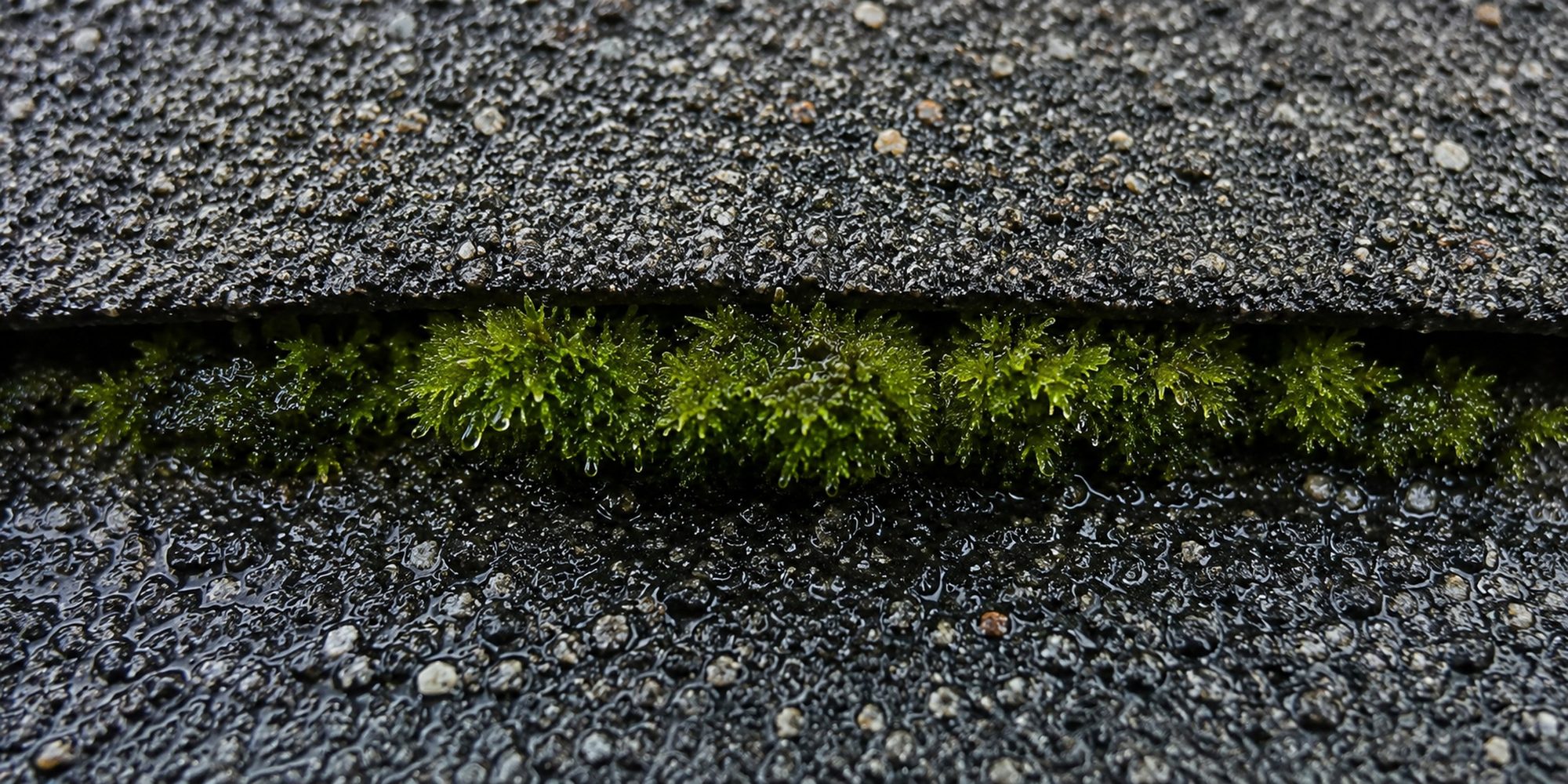
A moss cushion is mostly water by weight, and it releases it slowly. The shingle underneath does not get a dry day between October and May.
The rhizoids creep into the gap beneath the shingle above and gradually push it up. Once an edge stops lying flat, wind and rain get underneath it.
Not the shingle — the decking under it. That is the difference between a treatment and a re-roof, and it is why the timing matters.
Mosses and lichens tend to accumulate soil and other debris on the roof… this encourages the growth of fungi and accelerates decomposition.PNW733 — WSU / OSU / University of Idaho Extension
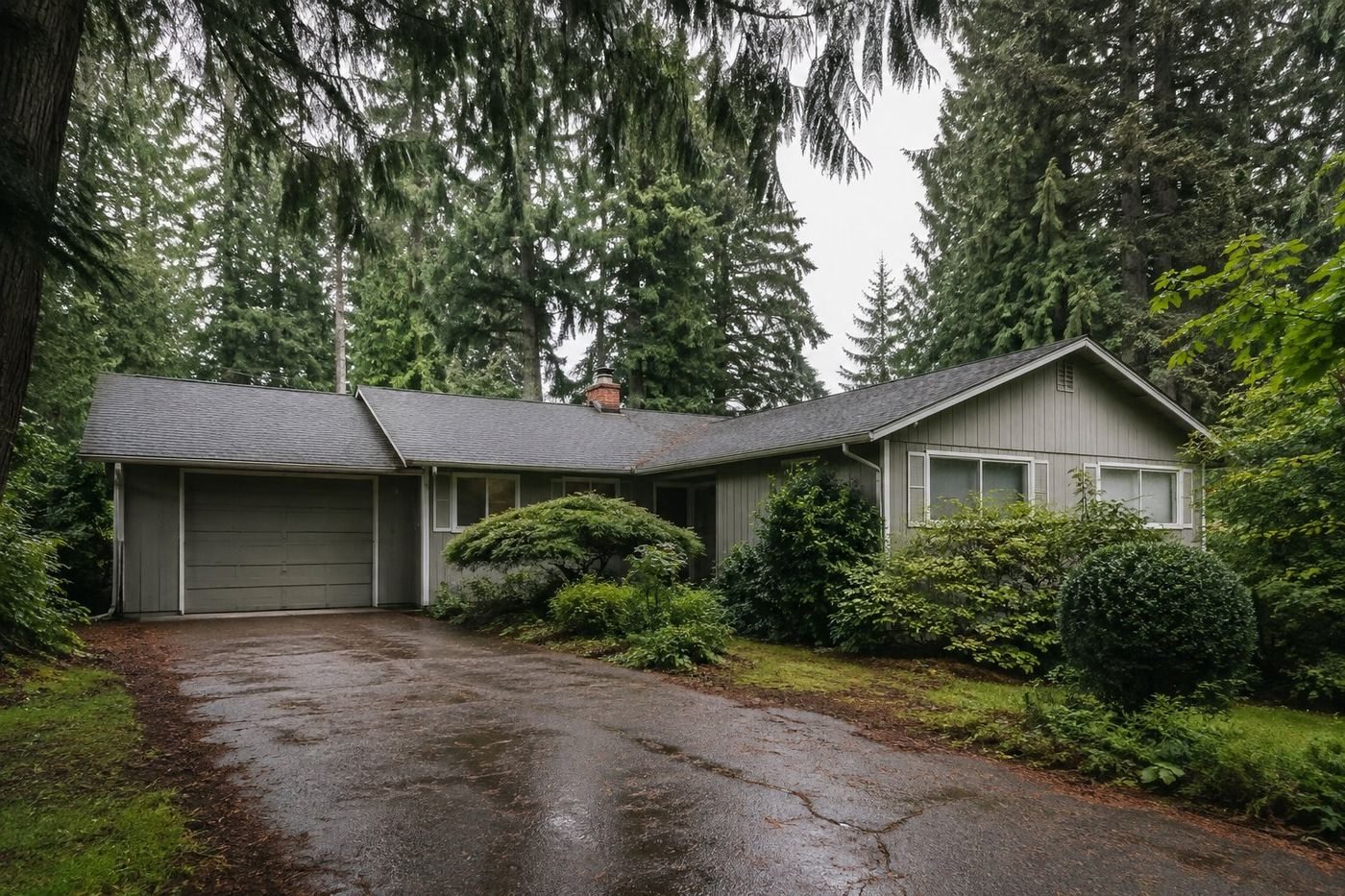
Which one is your roof?
This is the question worth answering, because the right response is completely different at each stage — and at two of the five stages, the right response is to do nothing yet.
Find your roof on the scale
Look at your roof from the driveway, ideally on the north side. Pick the closest match.
What the sources actually say
| Source | Position |
|---|---|
| ARMA Asphalt Roofing Manufacturers Association | No scientific evidence that algae damages asphalt shingles. Never pressure-wash an asphalt roof. |
| Oregon State University Extension, 2024 | Moss clings to asphalt and metal roofs but does not degrade those materials. Shade removal is the durable fix — “you’ve got to let the sun in or it will return.” |
| IKO Shingle manufacturer | A thin layer of moss is not troublesome; large clumps can degrade shingles and create openings for leaks. |
| InterNACHI Home inspectors’ association | A slow process, and mostly a cosmetic issue. |
| PNW733 WSU / OSU / Idaho Extension | Retained moisture encourages fungal growth and accelerates decomposition. Most treatments last one to three years. |
The honest summary. No manufacturer or extension service puts a number of years on it, because every roof, slope and shade line is different. What everyone agrees on is the direction: moss holds moisture against the roof, moisture accelerates what is underneath, and the fix gets more expensive the longer it runs. That is why catching it at stage 2 is such good value.
What it costs to be wrong in each direction
Treating a roof that did not need it costs a few hundred dollars. Ignoring stage 3 or 4 on a twenty-year-old roof risks sheathing replacement, which is the genuinely expensive outcome — and the one nobody photographs, because by then the shingles are off and the roof is a construction site.
Not sure which stage you’re looking at?
Send us a photo from your driveway. We’ll tell you which stage it looks like — including if the answer is “this can wait a year” — and connect you with a licensed local specialist when it is time.
Call (253) 366-8066Get a Free Quote We are not a contractor and do not perform work. We connect Pierce County homeowners with independent licensed specialists.